If July was one of the quiet months, August and September are the opposite — four of the Twelve Great Feasts fall in these six weeks, more than in any other stretch of the year, and September closed with a piece of history: the first American-born bishop ever raised to the altars. Not to mention it was pilgrimage season — when many of the eparchies host their eparchy-wide gatherings. Here is a look back at both months — and ahead to October.
Blessed Fulton Sheen
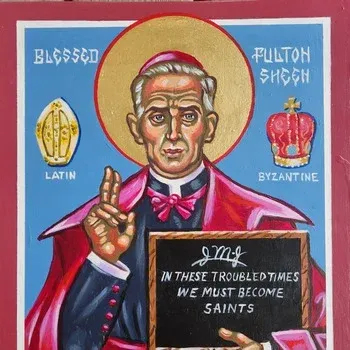
On September 24, Archbishop Fulton J. Sheen — the radio and television preacher millions of Americans once gathered around their sets to hear, best known for Life Is Worth Living — was declared Blessed at a beatification Mass before thousands at the Dome at America’s Center in St. Louis. Cardinal Luis Antonio Tagle, representing Pope Leo XIV as papal delegate, read the Church’s formal declaration. Sheen is the first bishop born in the United States ever to be beatified. A second miracle attributed to his intercession is now needed for canonization; six further cases are already under investigation.
For readers of this blog, one detail of his life matters especially: Archbishop Sheen was bi-ritual, holding priestly faculties in both the Roman and Byzantine rites, and known for his closeness to the Christian East — he liked to invoke St. John Paul II’s image of the Church breathing with “two lungs,” Eastern and Western. The connection was felt immediately: two days after the beatification, on September 26, Bishop Robert Pipta of the Byzantine Catholic Eparchy of Parma — the same eparchy that keeps the shrine at Máriapócs (see below) — celebrated a Divine Liturgy in thanksgiving for Sheen’s beatification, unveiling a new commemorative icon of Blessed Sheen for the occasion. This liturgy was performed as part of a weekend full of special liturgies of thanksgiving from several members of the Catholic Church. Seating was at full capacity for the Byzantine Catholic commemorative liturgy.
The feasts and fasts
- The Procession of the Cross — August 1 — the first day of the Dormition Fast, marked by an outdoor procession with the Cross and the Lesser Blessing of Water.
- The Dormition Fast — August 1–14 — a two-week fast, strict by tradition, preparing the faithful for the great feast that closes it.
- The Transfiguration of Our Lord — August 6 — one of the Twelve Great Feasts, the feast of the uncreated light of Tabor. It is customary to bless fruit on this day, especially grapes — the first-fruits of the harvest offered back to God.
- The Dormition of the Theotokos — August 15 — the “Falling Asleep” of the Mother of God, one of the oldest and greatest of her feasts. Many parishes bless flowers and herbs in her honor.
- The Beheading of St. John the Baptist — August 29 — a strict fast day outside the four major fasting seasons, commemorating the Forerunner’s martyrdom at the hand of Herod.
- The Beginning of the Byzantine Liturgical New Year — September 1 — the Indiction, the quiet turning-over of the Church’s calendar. Less visible than a Great Feast, but every liturgical year since the fourth century has begun on this day.
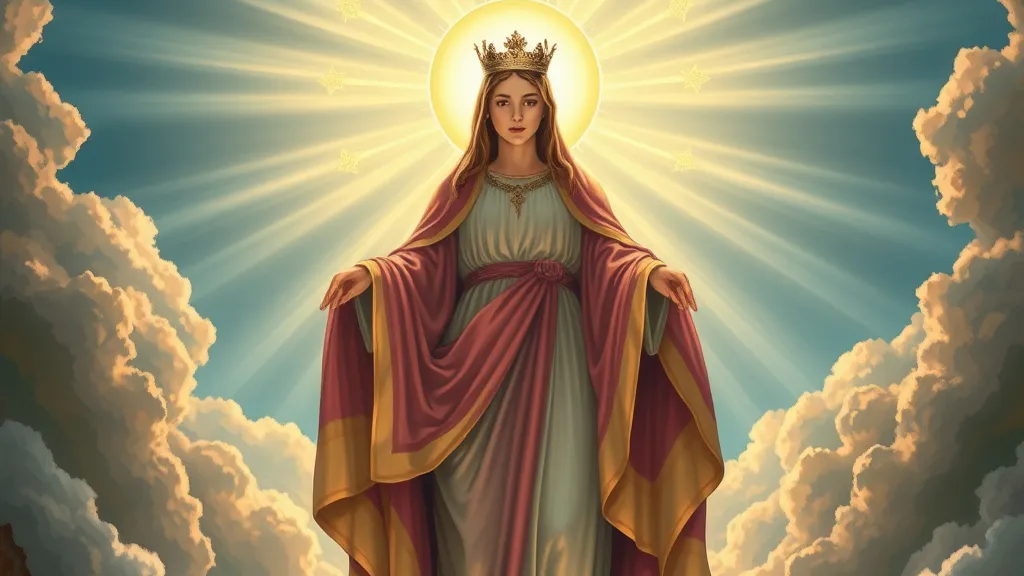
- The Nativity of the Theotokos — September 8 — one of the Twelve Great Feasts, and fittingly the first of them in the new liturgical year: the Church opens its year with the birth of the woman who would bear God into the world.
- The Universal Exaltation of the Precious and Life-Giving Cross — September 14 — one of the Twelve Great Feasts and a strict fast day, marking the finding of the True Cross by St. Helena and its elevation before the faithful. Parishes mark it with a solemn elevation of the cross at the center of the church.
Around the eparchies
- August 13–15 — The Assumption Pilgrimage at the Basilica & National Shrine of Our Lady of Lebanon (North Jackson, Ohio) — the Maronite national shrine’s largest gathering of the year, centered on the Assumption of the Mother of God.
- August 15–16 — The pilgrimage at the Shrine of Our Lady of Máriapócs (Burton, Ohio) — the Byzantine Catholic (Ruthenian) shrine of a copy of the weeping icon of the Mother of God, drawing pilgrims from across the United States and Canada for a faith filled weekend. Some photos from that weekend can be viewed here: https://www.facebook.com/ChristTheBridegroom
- September 6–7 — The Pilgrimage to Mount St. Macrina (Uniontown, Pennsylvania — Labor Day weekend) — the Sisters of St. Basil the Great’s great annual pilgrimage, and the largest Byzantine Catholic gathering in North America. Thousands of Catholics filtered in throughout the weekend, some stopping for a day, others staying overnight in hotels, and many others choosing to ‘rough it out’ in tents on the monastery ground. Check out photos from the weekend here: https://www.facebook.com/sistersofstbasil.uniontown
- September 13 — Christ the Bridegroom Monastery welcomes two new rasophore nuns (Burton, Ohio) — at Vespers for the Exaltation of the Cross, Sister Marta (formerly Maddie) and Sister Thekla (formerly Rose) received the monastic habit and their new names at tonsure. Mother Cecilia, the monastery’s hegumena, chose the names from suggestions the women submitted — Marta after St. Martha of Bethany, Thekla after St. Thekla, Protomartyr. Read the full introduction.
- Mid-to-late September — Child Faith Formation Programs Begin — ECF (Eastern Christian Formation), sometimes known as CCD or simply “Sunday School,” programs should be starting around this time. Make sure to check with your parish for signups and information!
Looking ahead: October
October opens with a feast beloved across the whole Slavic Christian world, Ruthenians included:
- The Protection of the Most Holy Theotokos (Pokrov) — October 1 — commemorating the vision of the Mother of God spreading her veil (omophorion) over the faithful at the Blachernae church in Constantinople, protecting the city from siege. Not one of the Twelve Great Feasts, but few feasts run deeper in Rusyn and broader Slavic devotion — churches and towns across the Carpathians and their American daughter-parishes carry her name.
The feast opens straight into the last pilgrimage of the season:
- The weekend of October 2 — The Midwest Eparchial Pilgrimage (St. Mary Byzantine Catholic Church, Whiting, Indiana) — the Eparchy of Parma’s Midwest gathering, fittingly devoted to the Protection of the Mother of God and to “the Mother of God, Searcher for the Lost.” An invitation, in Bishop Robert Pipta’s own words, to rest, to entrust yourself to Mary’s care, and to pray for those far from Jesus. Talks from Nathan Eubank and Fr. Michael Lee, a Saturday-night bonfire chat with the bishop, and the closing pilgrimage of a season that started back in August at Our Lady of Lebanon.
- October 3 — Cleveland Catholic Women’s Day of Reflection (Holiday Inn Independence, Ohio) — a day of Mass, Adoration, and talks on the theme “May the Lord Give You Peace,” drawn from St. Francis of Assisi. Among the featured speakers: Byzantine Catholic nun Mother Natalia, of Christ the Bridegroom Monastery — the same community that welcomed two new rasophore nuns just weeks before (see above).
- The Feast of St. Francis of Assisi and the Blessing of Animals — October 4 — a Western tradition, tied to the great friar’s own love for creation, that a number of Byzantine Catholic parishes have adopted as their own. If yours hasn’t, don’t let that stop you — you can still bring your pet to your priest and ask for a blessing.
- Halloween — October 31 — worth a clarifying note before anyone writes in: this is not the Eastern Church’s All Saints’ Day. The Byzantine calendar keeps its own All Saints’ feast on the Sunday after Pentecost, not November 1 — a distinction worth a full article of its own, coming down the road. But Halloween’s older name, All Hallows’ Eve, tells you exactly what it actually is: the vigil of the Western All Saints’ Day. Byzantine Catholics, as part of the Universal Catholic Church, share in that celebration with our western brothers in Christ. Nothing about the calendar difference, or cultural sensationalism, should stop a Byzantine family from carving pumpkins, answering the door with everyone else or dressing up as their favorite saint.
- Blessed Theodore Romzha — October 31 — the same date, kept for something far weightier. Romzha became Bishop of Mukachevo in 1944, only 33 years old. Three years later the Soviet NKVD staged a truck “accident” to kill him; when he survived it, they finished the job with poison in his hospital bed — after dismissing the hospital staff Godfather style. He died at 36, and was beatified in 2001. His martyrdom cleared the way, within months, for the very persecution Blessed Pavel Gojdič would go on to refuse.
An absolutely packed August and September lead into a quiet October. A good time to recharge your batteries before the Nativity Fast leads us into Christmas and Theophany. See you in October.