The day after Thanksgiving, most of the country starts Christmas. The lights go up, the music starts, the calendar fills with parties, and by the time December 25 arrives a lot of us are worn out by it.
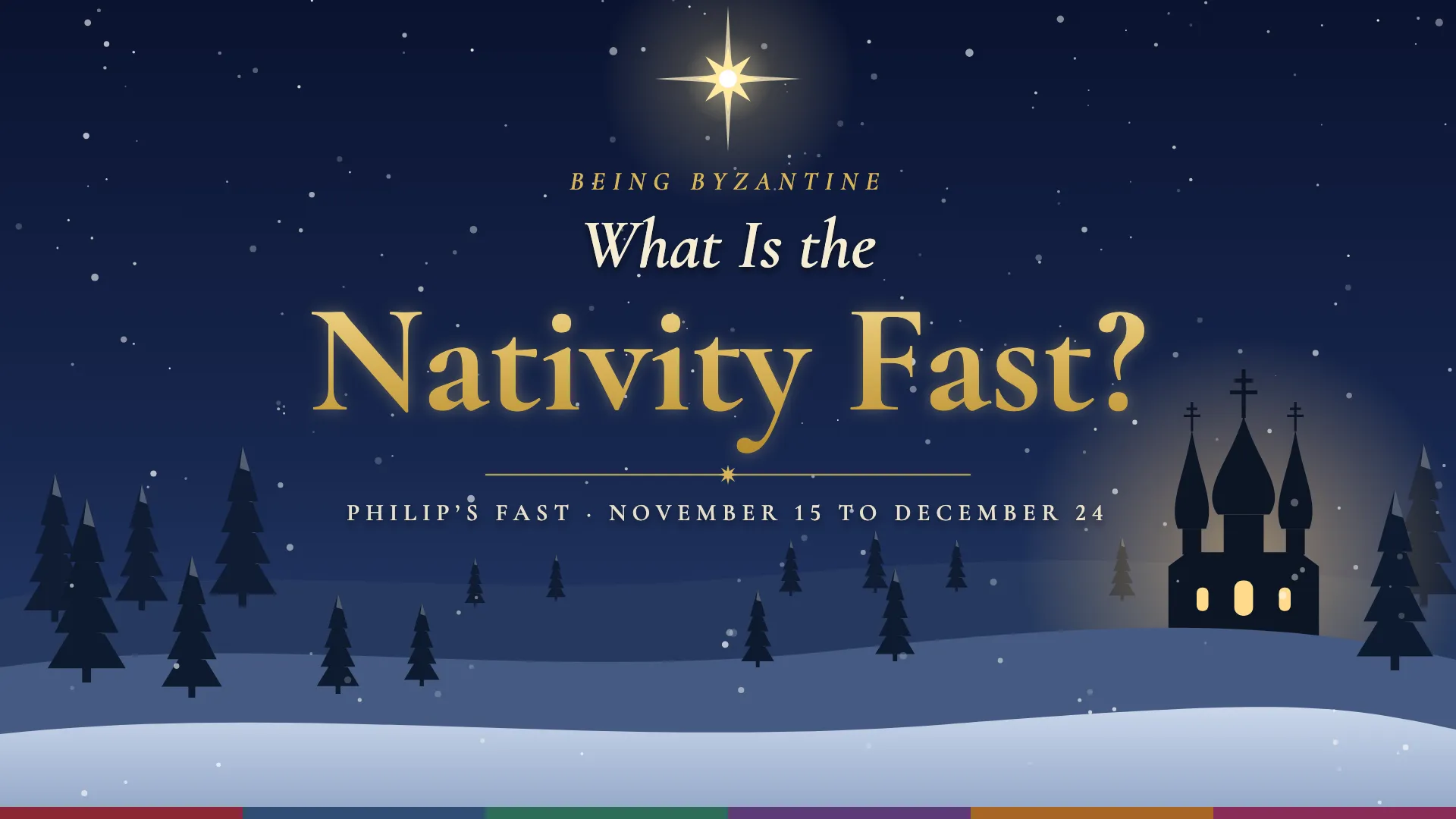
The Christian East does it the other way around. It begins getting ready on November 15, and the getting ready is quiet: simpler meals, more prayer, more giving, and the Christmas music coming in slowly instead of all at once. The season has a name, the Nativity Fast, and an older, homelier one: Philip’s Fast. It runs forty days, from November 15 through December 24.
If you grew up Roman Catholic, the nearest thing you know is Advent, and it is the same idea in a different key. This year the West’s Advent begins on November 29. The Nativity Fast is the Eastern way of waiting, and the first thing to notice about it is its name. It is a fast. You wait with your body as well as your calendar.
Philip’s Fast
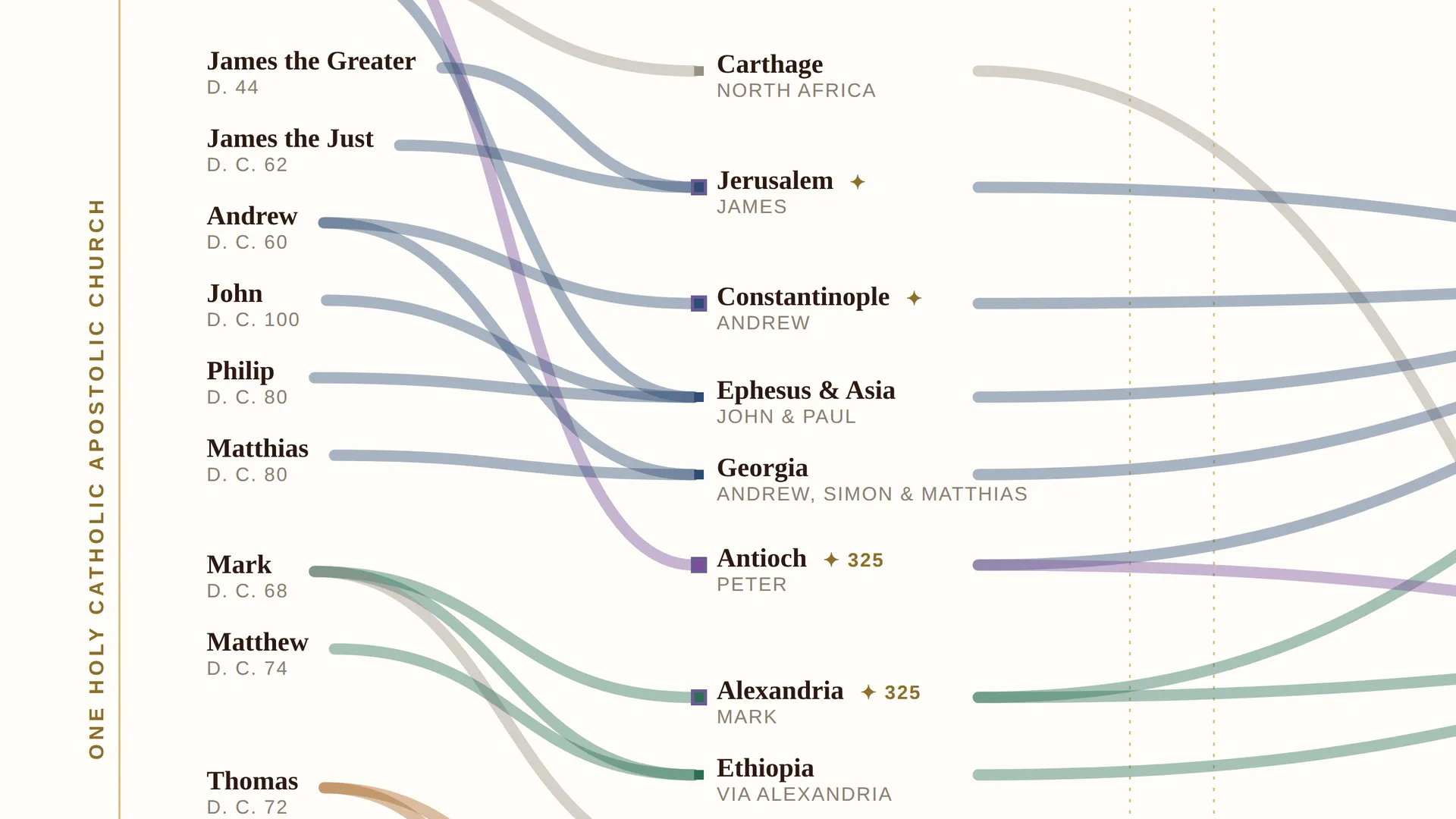
November 14 is the feast of the Apostle Philip, one of the Twelve, who carried the Gospel into Phrygia and died at Hierapolis (we follow him out of Jerusalem in The Church the Apostles Built). The fast begins the next morning, which is how it got his name. Among the Carpatho-Rusyns, whose families filled so many of the Ruthenian parishes in America, it was simply Philipovka: Philip’s Fast.
A legend says that Philip, near the end of his life, asked the other Apostles to fast for forty days after his death. It may have helped the name stick, but nobody claims it is history. The likelier story is simpler. The Church already had one forty-day fast, the Great Fast before Pascha, and it was natural to prepare for the second great feast the way it prepared for the first.
Why forty
Forty is the Bible’s number for getting ready. Moses was on Sinai with the LORD forty days and forty nights before he came down with the tablets (Exodus 34:28). Elijah walked forty days on one meal, carried by it to Horeb, the mountain of God (1 Kings 19:8). And Christ, before He began to preach:
“And he fasted forty days and forty nights, and afterward he was hungry.” (Matthew 4:2)
Forty days of fasting, in other words, is not an arbitrary length. It is how Scripture’s people approach an encounter with God. The Church borrowed it for Pascha, and then for the Nativity.
It was not always forty days
The fast we keep today took centuries to settle. For a long time its length and strictness were a matter of local custom. Some Christians kept it for a week, others for longer. A council at Constantinople in 1166 fixed it at forty days, and the canonist Theodore Balsamon, writing a little later, noted that only monks and nuns were bound to the full forty. Lay people could keep fewer.
That history is worth knowing, because it tells us what kind of thing this fast is. It is a discipline the Church has always adjusted to the strength of the people keeping it. It was never a test that you pass or fail.
What Byzantine Catholics are asked
In the Ruthenian Byzantine Catholic Church, the Nativity Fast is voluntary. You may keep it fully, partially, or not at all. The Great Fast before Pascha has particular days of abstinence set by the Church. The Nativity Fast does not.
Voluntary does not mean it doesn’t matter. The Church has left the shape of the fast to you, not whether you prepare. Bishop Robert Pipta of Parma has urged the faithful to pause during this penitential time and to pray for one another. The weight of the season falls on two things: fasting (emptying yourself) and almsgiving.
Why we fast
Fasting is not a diet, and it is not a punishment. Isaiah says what God wants from a fast, and it is not about food:
“Is not this the fast that I choose: to loose the bonds of wickedness, to undo the thongs of the yoke, to let the oppressed go free, and to break every yoke? Is it not to share your bread with the hungry, and bring the homeless poor into your house?” (Isaiah 58:6–7)
So the old Christian trio goes together: prayer, fasting, almsgiving. Each one without the others goes bad. Fasting without giving turns into dieting. Giving without prayer turns into fundraising. Prayer without either is just a pleasant thought. And Christ was clear: it’s not if you fast, but when. He also asks that it be quiet:
“But when you fast, anoint your head and wash your face, that your fasting may not be seen by men but by your Father who is in secret; and your Father who sees in secret will reward you.” (Matthew 6:17–18)
There is also a reason that belongs to this fast in particular. The feast we are walking toward is God emptying Himself into a manger. Paul says of Christ that He “emptied himself, taking the form of a servant, being born in the likeness of men” (Philippians 2:7). We cannot earn that, and a few skipped dinners do not come near it. But we can set a little space aside in our own lives, so that when the feast arrives there is room to receive it.
Go to confession
Of everything the fast invites you to do, going to confession is one of the most important. Think of it as a six-month checkup. Most of us would not go years without seeing a doctor or a dentist, and the Church gives us two long fasts a year, Great Lent in the spring and this one in the fall, so each is a natural time to check in. The Mystery of Reconciliation, or confession, is not only for grave sin. It is a chance to heal the wounds that run deep in our lives, wherever we are in our spiritual journey.
The fast empties a little space in your life, and confession clears out what is in the way. You go, say what is wrong, hear the words of absolution, and leave lighter than you came. Ask your pastor when your parish hears confessions, and put a date on the calendar now, not in the last days before Christmas, when time is short.
A small, real plan
If you have never kept the fast, do not try to keep all of it. Pick one thing from each of the four below, and make it smaller than you think you need.
- At the table. Wednesdays and Fridays are the Church’s old fast days all year. Meatless Wednesdays and Fridays are a good first step. Add a day only if the first ones go well.
- In prayer. Add one prayer and keep it. A good one for this season is to read the beginnings of the Gospels, a little at a time: Matthew 1–2 and Luke 1–2, the story of the Nativity as the Evangelists tell it. Or take up the Jesus Prayer, if you have never prayed it.
- In giving. Volunteer some extra time, donate food, keep extra cash in your wallet for when you see someone in need. The Church gives you a saint for exactly this on December 6: St. Nicholas, who gave in secret.
- At home. Let Christmas arrive in stages. The Church itself does: from the feast of the Entrance of the Theotokos on November 21, the first notes of the Nativity hymns begin to appear in its services, a few weeks before the feast, and they grow from there.
How the fast ends
December 24 is the strictest day of the fast. In the tradition, families fast until after Vespers and the Liturgy.
Fasting through the day is also a way to remember the hardship of that night: a long journey, no room at the inn, a child laid in a manger (Luke 2:4–7). It is a quiet way to keep Mary and Joseph company on the road to Bethlehem.
And, speaking only for myself, I find it a quiet homage to the mothers of today as well. Many hospitals limit what a woman in labor can eat, and a day without a full meal is a small thing beside labor itself. But it is one more way to remember what a mother goes through to bring a child into the world.
After that comes the Holy Supper, which is still a fast meal: meatless, and usually without dairy. In many families it is built of seven, nine or twelve dishes, with twelve standing for the Apostles. It begins when the first star appears, and many tables carry bread, for Christ, and a candle, for the star over Bethlehem. Some families bring in hay or straw, to remember where He was laid.
Then, on the night of the feast, the greeting that the whole fast has been leaning toward:
Christ is born! Glorify Him!
Forty days is long enough to change something and short enough to finish. Begin on the fifteenth.